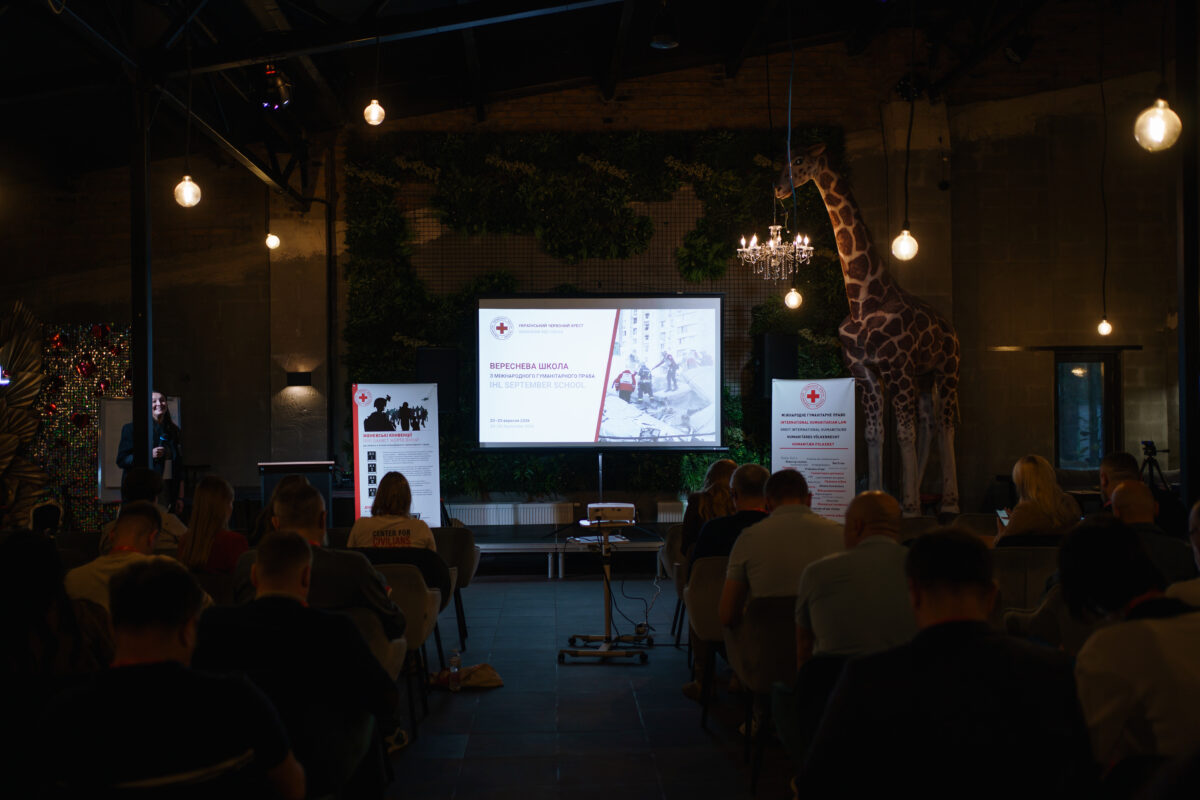
Alina Kirieieva, a student majoring in International Law, participated in the September School on International Humanitarian Law, organised by the Ukrainian Red Cross Society. The training aimed to deepen participants’ practical knowledge of international humanitarian law (IHL), the specific aspects of its application during armed conflict, and the implementation of relevant provisions into Ukrainian national legislation.
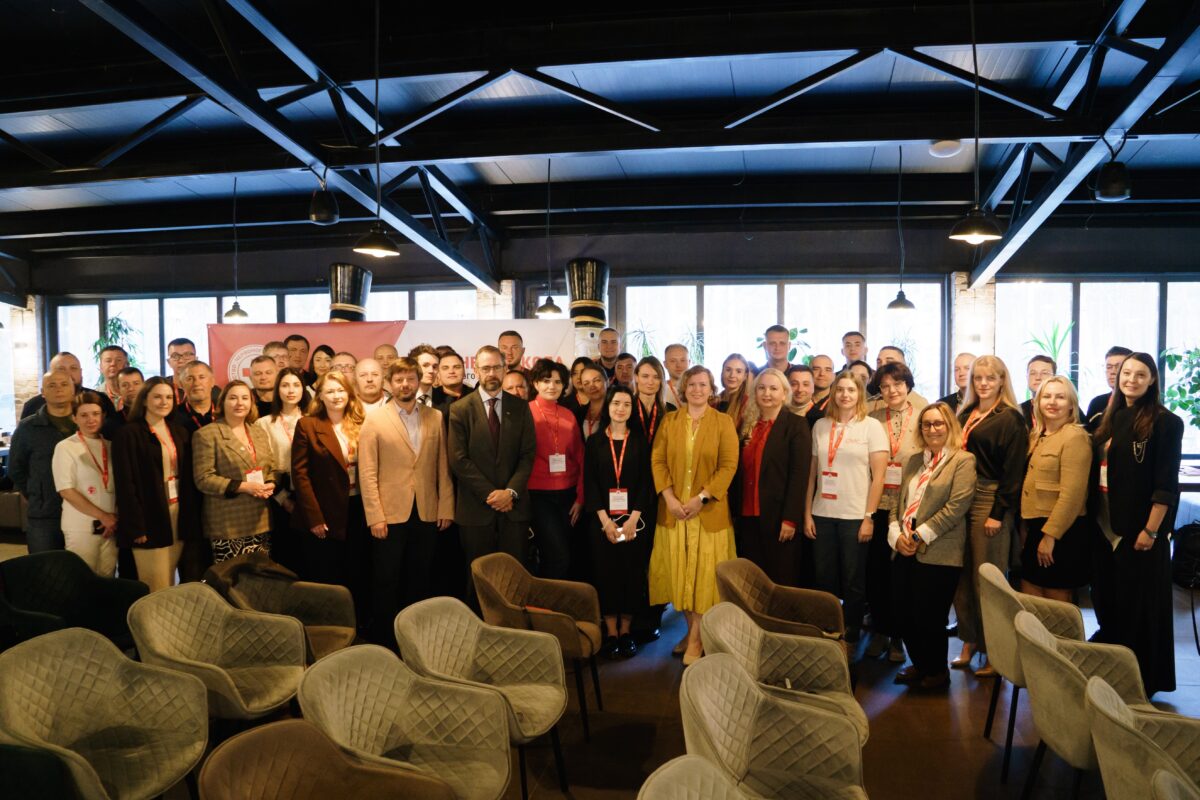
The September School brought together more than 65 participants, including representatives of Ukrainian government institutions, law enforcement agencies, the security and defence sector, regional authorities, academia, and international organisations. Members of the Interagency Commission on the Application and Implementation of International Humanitarian Law in Ukraine also participated in the event.
During the training, participants examined the fundamental provisions of international humanitarian law, including the classification of armed conflicts, the fundamental principles of IHL, the relationship between international humanitarian law, international human rights law and international criminal law, the protection of civilians, the rules governing the conduct of hostilities, and the treatment of prisoners of war.
Particular attention was paid to contemporary challenges in the field of IHL. Participants discussed the protection of the natural environment and cultural property during armed conflicts, humanitarian assistance, the use and protection of the Red Cross emblem, and the activities of the International Red Cross and Red Crescent Movement.
An important part of the programme focused on modern means and methods of warfare. Together with experts, participants examined the use of unmanned systems, information and communication technologies, cybersecurity issues, and the application of artificial intelligence in armed conflict.
The practical component of the training addressed the implementation of IHL provisions into national legislation. Representatives of the Ministry of Defence of Ukraine, the British Red Cross and the Norwegian Red Cross shared the experiences of Ukraine and the United Kingdom in this field. Participants were also introduced to the Platform for the Progressive Development of IHL, the Global Initiative to Galvanize Political Commitment to International Humanitarian Law, and issues of accountability for violations of IHL.
A separate thematic session was devoted to the Register of Damage for Ukraine (RD4U), its fundamental principles, categories of claims, and procedures for submitting claims by affected individuals.
Training sessions were delivered by representatives of the Ministry of Foreign Affairs of Ukraine, the Ministry of Defence of Ukraine, the Ukrainian Red Cross Society, the International Committee of the Red Cross, the Danish, Norwegian, British and Canadian Red Cross Societies, as well as other Ukrainian and international experts in international humanitarian law.
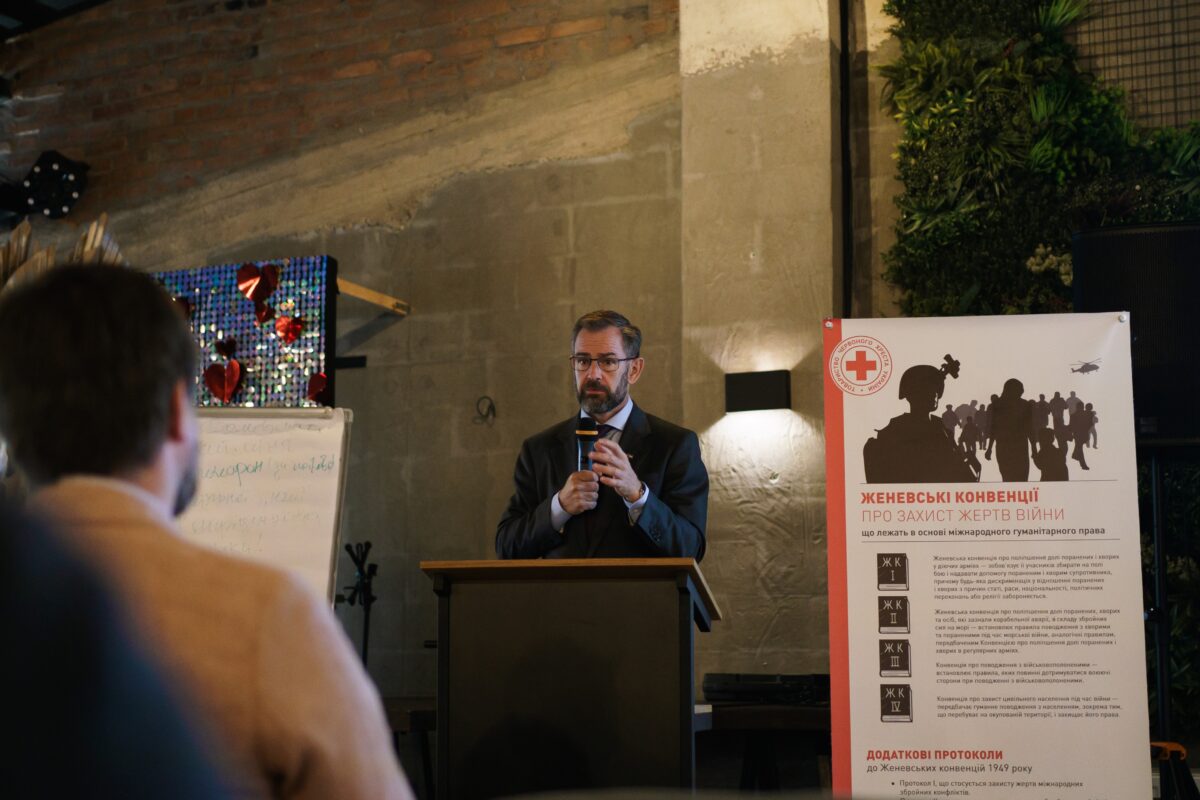
Opening the event, Maksym Dotsenko, President of the Ukrainian Red Cross Society, emphasised the practical importance of international humanitarian law and the need to apply its provisions to protect civilians, the wounded and sick, medical and humanitarian personnel, and other persons protected under IHL. Among the speakers and representatives who welcomed the School’s participants were Lars Ragnar Aalerud Hansen, Ambassador of Norway to Ukraine; Anna Slavcheva, Head of the Norwegian Red Cross Delegation in Ukraine; Anton Korynevych, Director of the Department of International Law and International Legal Countermeasures against Aggression at the Ministry of Foreign Affairs of Ukraine; and Olena Kocherhina, Head of the IHL Unit of the Ukrainian Red Cross Society.
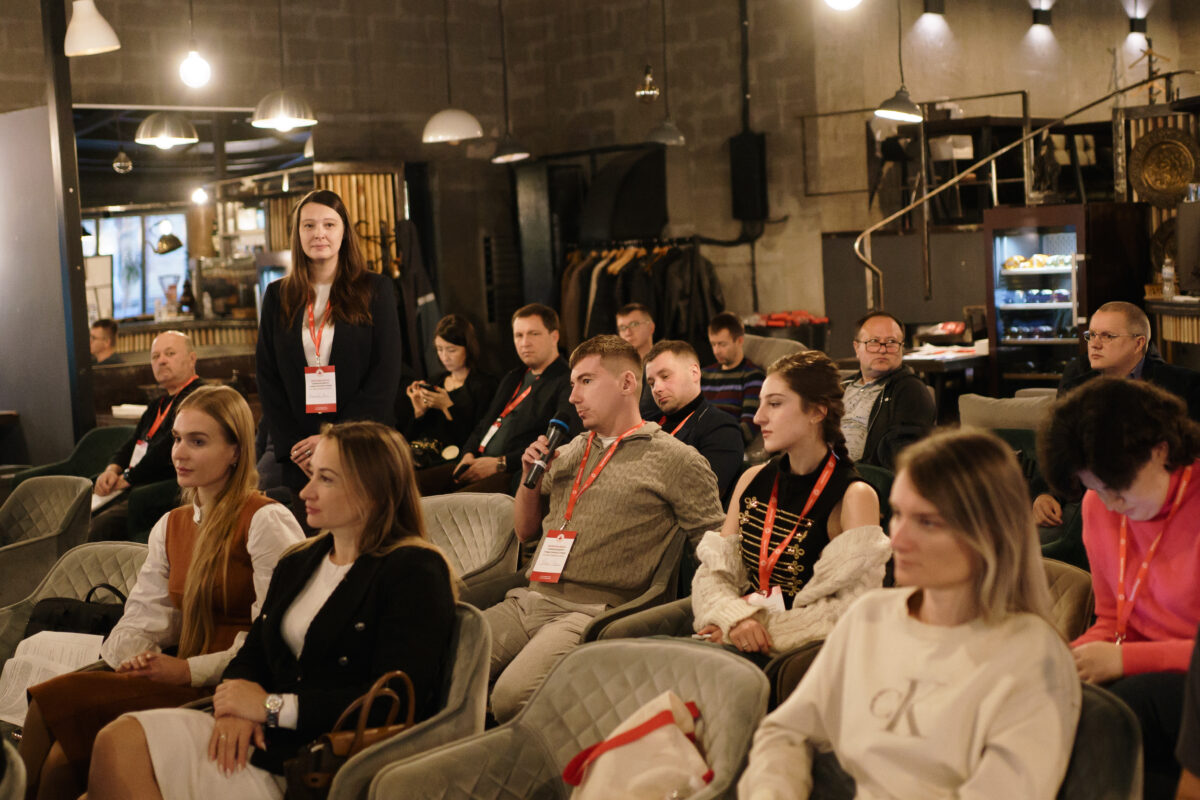
The training was conducted through expert presentations, discussions, question-and-answer sessions, and practical exercises. Case studies enabled participants to apply international humanitarian law to specific situations and discuss practical aspects of its implementation with specialists.
Participation in the September School provided valuable professional and educational experience, enabling participants to deepen their knowledge of international humanitarian law, become familiar with current approaches to its application, and gain a practical understanding of contemporary challenges in this field.